June 3, 2026
Conscious Technology: Not a Problem of Technology. A Problem of Consciousness
Author: Christoph Calabek, Principal Strategy & Business Development
4.5 hours. Every day. That’s how much time many of us spend on our smartphones each day. Scrolling, swiping, tapping. At the end of the day, we’re left with a vague sense of having been busy. But with what, exactly?

We live in an age where we have access to more knowledge than any generation before us. Therapists, courses, communities, research, creative tools—all literally right in our pockets. And what do we do with it? We watch Reels. We scroll through feeds that we won’t remember five minutes later. We consume without anything sticking.
That’s not a problem of technology. It’s a problem of consciousness.
Technology is an Amplifier
Technology has no intention of its own. It is a tool. But like any tool, it amplifies what is already there. Those who act with awareness can move mountains with technology. Those who act unconsciously use it to amplify their own distraction.
A person who knows what they’re looking for can find on the internet in minutes what previous generations needed days to find in libraries. A person who doesn’t know what they’re looking for gets lost in the endless stream of curated distractions. Same technology. Completely different effects.
The big platforms know this. Their business models aren’t based on your satisfaction, but on your attention. The longer you scroll, the better for their KPIs. Whether you’re wiser, calmer, or happier afterward plays no role in this equation.
However, placing all the blame on the corporations is too easy. It’s convenient to point to TikTok, Instagram, and the like and say they’re making us addicted. Yes, their mechanisms are designed for that. But how we deal with it is entirely up to us. Responsibility doesn’t end with the algorithm. It begins there.
From Consumer to Creator
The transformation we are currently undergoing is not a technological one. It is a human one. It is about the shift from passive consumption to active creation. From unconsciously reacting to consciously acting. Not against technology, but with it.
I’ve experienced this myself. During a period when I wasn’t doing well, I started to consciously use technology differently. Not as a distraction, but as a tool. I learned to consciously control my algorithm, consumed different content, and specifically sought out things that would help me grow. The result was noticeable. Not because the technology changed, but because my approach to it changed.
That sounds trivial. But it isn’t. Because it requires something that has become a rarity in a world designed for constant motion: to pause.
Why this Affects the Company, not just Individuals
This shift in mindset isn’t just a personal one. It affects organizations just as much.
When companies implement digital systems, they almost always start by asking about the tool. Which software? Which AI? Which feature? The question that’s rarely asked is: What behavior do we actually want to support? What impact should this system have on the people who use it?
At Factorial, we focus precisely on this question. Not because we’re anti-technology. On the contrary. Technology is in our DNA; we develop digital ecosystems, integrate AI into processes, and shape the future. But we never start with the technology. We start with people, their goals, their processes, and their responsibilities. Only once it’s clear what impact a system should have does the question of “how” arise.
Most technology decisions are driven by features, not by impact. Tools that shift work rather than simplify it. Digital structures that increase complexity rather than creating clarity.
Conscious Technology
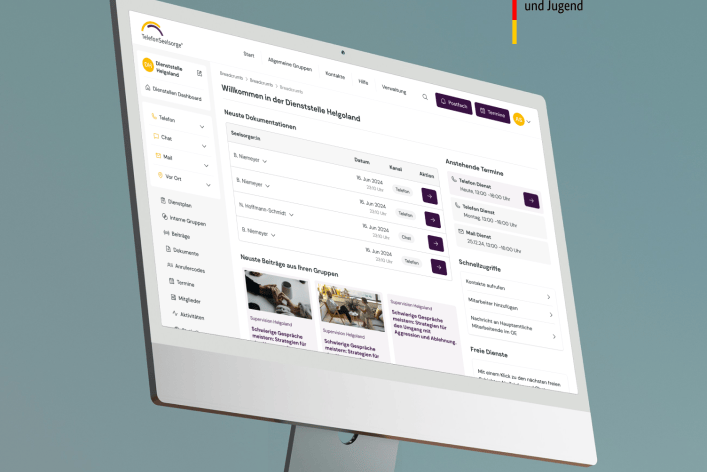
Here’s an example from our work. For the TelefonSeelsorge, we developed a digital operating system that connects over 8,000 volunteers across 104 locations in Germany. Training, communication, knowledge sharing—all designed for people who support others in crisis situations.
During development, the central question was never “What features should we include?” but rather “What must a system be like to serve these people?” People who aren’t tech-savvy. Who pick up the phone at three in the morning when someone doesn’t know what to do. They don’t need a complicated tool. They need something that works reliably.
That is Conscious Technology. Not a buzzword, not a framework. But the consistent question: Does this system serve the people who use it?
The Three Levels of Conscious Technology
When we talk about the mindful use of technology, we’re operating on three levels.
Personal.
How do I use digital tools myself? Am I a consumer or a creator? Do I control my algorithm, or does it control me?
Organizational.
How do we design digital systems in companies and organizations? Do we start with the impact or with the feature? Do our tools serve people, or are they an end in themselves?
Societal.
How do we, as a society, want to deal with the power of technology? Who bears responsibility when systems scale? And what happens if no one pauses before the next system goes live?
These three levels are interconnected. A person who uses technology consciously on a personal level will make different decisions within their organization. An organization that consciously designs technology thereby influences the society in which it operates.
What this Changes
People who begin to recognize their self-efficacy change. They don’t become more productive in the traditional sense. They become more focused. They know what they want and use technology strategically to achieve it.
This isn’t a utopian ideal. It’s a choice that every individual and every organization can make every day.
A Beginning, not a Manifesto
Conscious Technology is not a finished concept. It is an invitation to pause and ask: Am I using technology, or is it using me?
This question sounds simple. The honest answer, however, usually isn’t. But that is exactly where awareness begins. And with awareness comes change.
Conscious digital. Living with self-efficacy.