June 11, 2026
Donations, Systems, and the Big Question Behind Them
What the 2026 Fundraising Congress Reveals About the State of Civil Society
AI in fundraising, digital growth, and a civil society under political pressure—the 2026 German Fundraising Congress featured unusually candid debates. What these three days in Berlin revealed about the state of the sector—and what questions we took back with us to Hamburg.
Introduction
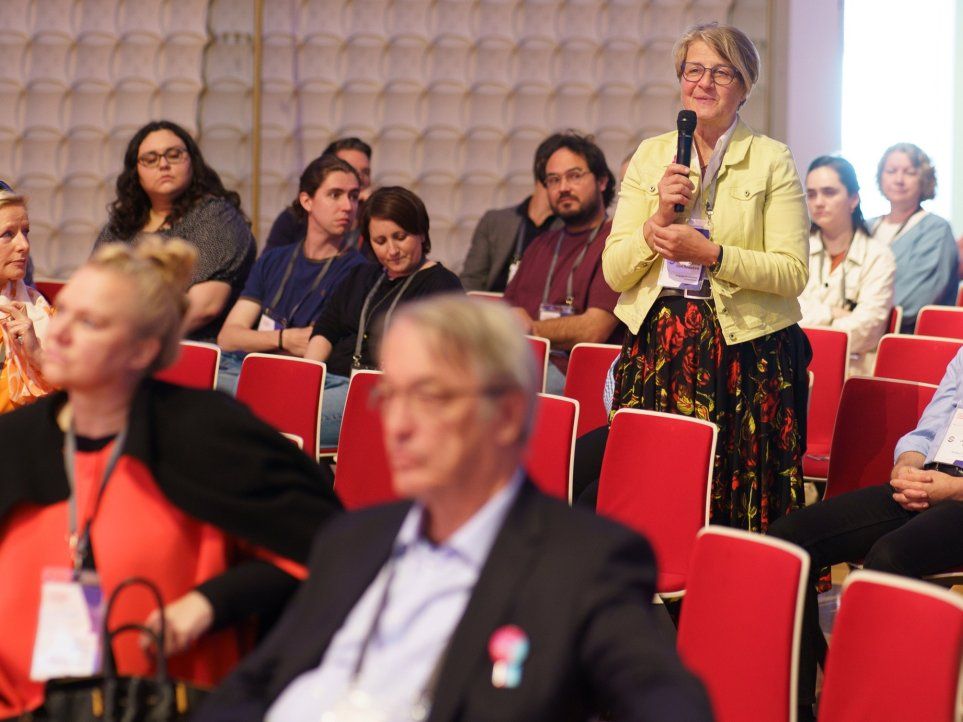
56 workshops, six masterclasses, over 800 people under one roof. It took a few days to process all the impressions. This year’s most significant industry gathering in the German-speaking world was packed—both in terms of content and atmosphere. What happened in the conversations in the hallways between sessions was at least as revealing as the program itself.
Funding cuts, political uncertainty, a donor base that is becoming younger and more digital, yet at the same time more demanding: The conference did not ignore these tensions but placed them front and center. One theme ran through nearly every room: The question of how an NGO raises funds is always also a question of how well it has its digital infrastructure under control.
Three areas of tension that shaped the conference
1. AI in Fundraising: Hype or a Real Tool?
Two sessions on Monday focused on AI—one of which explicitly aimed to assess the current state of the field: “New Working Group, First Data: Where Does AI Really Stand in Fundraising?” The overall tone was less euphoric than expected, but more productive. The tools are there. What’s missing in many places is the structure—clean data models, defined processes, and internal expertise.
At the same time, a session on Wednesday addressed a topic that has hardly been discussed in the NGO context so far: visibility in AI search. Those who don’t appear in the responses from ChatGPT, Gemini & Co. lose reach—including among potential donors. AEO and GEO, i.e., Answer Engine Optimization and Generative Engine Optimization, are no longer niche topics.
2. Digital Scaling: Why So Few NGOs Actually Succeed
Sjoerd Reijnen, co-founder of the Dutch fundraising agency Jalt, which develops digital fundraising campaigns for organizations such as Amnesty International and Greenpeace, posed a question that is uncomfortably precise: “Why do only a few NGOs scale digital donor growth, and what do they do differently?”
His answer aligns with what we consistently observe in practice: Digital fundraising growth is not a channel problem. It is a systemic problem. Organizations that scale treat their infrastructure as a platform—not as a collection of tools.
3. Civil Society Under Pressure: Taking a Stand as a Fundraising Strategy
The most politically charged panel was the Big Session on Tuesday afternoon: “Who Tells the Story? The Complex Discourse Between NGOs, Politics, and the Media”—moderated by Moritz Müller-Wirth (DIE ZEIT) and featuring Kevin Kühnert, former SPD Secretary-General and current lobbyist for the Finanzwende citizens’ movement, as well as Marina Weisband, psychologist, former Political Director of the Pirate Party, and current Managing Director of aula gGmbH, on the panel.
The mood in the room was focused, not defensive. The community is not responding to the growing pressure on NGOs by retreating, but with a clear counterargument: Taking a stand is not a risk. It is a distinguishing feature. The discourse has become more disorderly. But it is taking place—and that is worth more than the appearance of harmony.
What does all this have to do with digital infrastructure?
The three key themes of the conference—AI adoption, digital scaling, and social relevance—may initially sound like separate topics. They are not. They all hinge on the same fundamental question: Is an organization’s digital infrastructure robust enough to support its mission?
An NGO that wants to use AI effectively needs clean data structures. An NGO that wants to scale digitally needs a platform that structurally supports growth. And an NGO that communicates with integrity and credibility needs a digital presence that technically delivers on that credibility: fast, accessible, compliant with data protection regulations, and reliable.
Fundraising is the result of trust. Digital infrastructure is the foundation upon which this trust is built—or not.
From our work with NGOs, we know that the desire to make an impact is always there. What’s missing is rarely the will, but rather the technical foundation needed to translate that will into stable, scalable processes. The conference confirmed this. The question is no longer “if”—but “how.”
What we’re taking away from Berlin
One theme ran through nearly every session: cooperation over competition. People compete for better ideas—yet still treat one another with respect and openness. What was surprising was the candor of many of the contributions: less rhetoric about consensus, more honest analysis.
What we took away: the impression that the nonprofit sector is at a real turning point. The tools are there. Awareness is growing. What matters now is building the structures that bring both together.
The German Fundraising Congress is not a place where solutions are announced. It is a place where an industry thinks aloud—about technology, about attitudes, about the question of what role nonprofit organizations should play in a society that is currently questioning so much.
What does your organization need to grow digitally over the next two years—and what is holding it back? Get in touch to let us help you execute your digital strategy.