July 9, 2026
Interview with heise online and German Telephone Counseling: Trust Cannot Be Outsourced
Author: Niklas Franke, Marketing & Community Manager
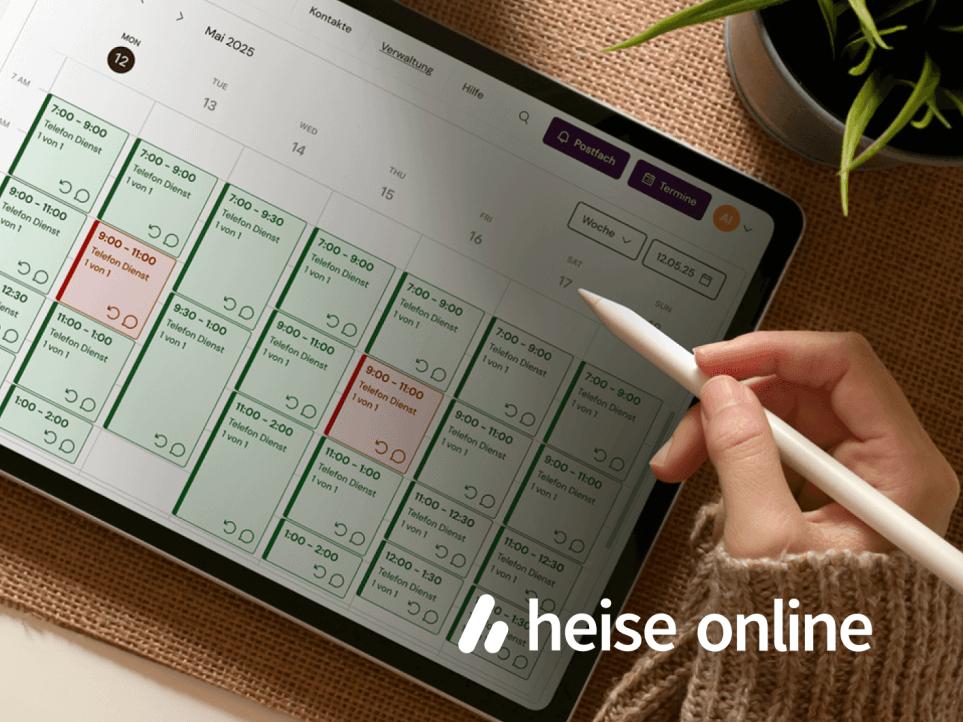
In a recent interview with heise online, Lydia Seifert, Executive Director of TelefonSeelsorge Deutschland (German Telephone Counselling), and Volkan Jacobsen, Managing Partner at Factorial, explain why the organization once again chose open source—specifically its DAISIE system—over proprietary systems from a U.S. provider.
Data Protection as the Starting Point
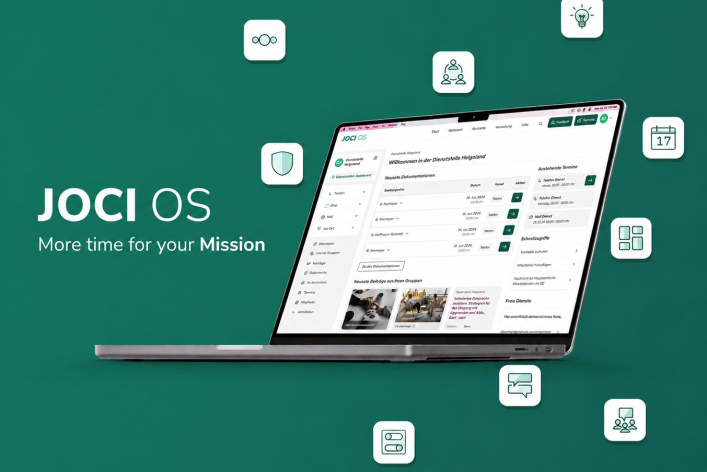
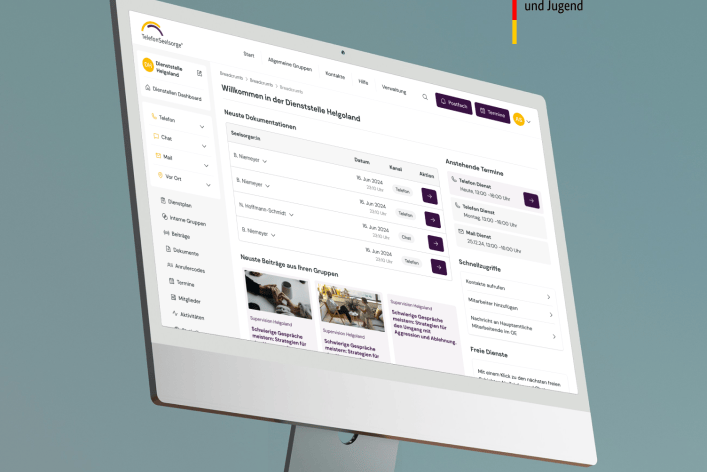
In 2025, TelefonSeelsorge Deutschland (German Telephone Counselling) laid the groundwork for consolidating various day-to-day operational processes into a single digital platform with the introduction of its new DAISIE system. As a partner, Factorial worked with TelefonSeelsorge to design and deploy this open-source-based system.
The specific reason for the new development was that the previous system, based on Drupal 7, had reached end-of-life: no more security updates, no further development. However, TelefonSeelsorge had already decided to go with open source regardless of this.
The reason goes deeper than a mere cost issue. TelefonSeelsorge promises the greatest possible anonymity to everyone who calls. This means: control over their own data and infrastructure, as little stored personal information as possible, and a clear separation between organizational data and the actual counseling sessions. Callers should be able to be certain that their conversation cannot be traced back to them anywhere. Dependence on a single foreign cloud provider is difficult to reconcile with this standard.
Digital Sovereignty in Practice
The structure of the platform itself illustrates what this decision means in practice. 104 independent branches, 8,000 volunteers, round-the-clock operations, 365 days a year—this is not a structure that can simply be forced into a standard system. A roles-and-permissions framework had to accommodate both local autonomy and central control: Volunteers see their own branch, coordinators work across branches, and the national association receives standardized statistics.
The platform runs on its own infrastructure, with file management via Nextcloud and chat via an integrated Mattermost instance—all under the organization’s own control, not rented from an external provider. And because a system that relies on volunteer engagement must not exclude anyone, accessibility was part of the architecture from the very beginning, rather than an afterthought: The platform achieves a Lighthouse Accessibility Score of 100 according to WCAG AA.
Open Source and Security
Open source and user-friendliness are not mutually exclusive. The entire interface of the telephone counseling service was developed in-house and is just as modern as any commercial software. Jacobsen also sees an advantage in open source when it comes to security: With proprietary software, users have no choice but to trust the manufacturer’s security promises; the source code itself cannot be verified. With open source, on the other hand, anyone can understand how the system actually works—and identify potential security vulnerabilities.
Digital Sovereignty: What Other Organizations Can Learn From This
For other organizations that work with sensitive data, this is the real lesson. Digital sovereignty is not a matter of the day-to-day policies of individual providers. It is an architectural decision that must be made before it is needed.
Factorial implemented the platform that emerged from this decision: DAISIE, now in use at all 104 branches of TelefonSeelsorge. We’ve documented in two case studies how the migration was successfully carried out during ongoing 24/7 operations, how a comprehensive business analysis revealed the actual scope—two platforms were unknowingly sharing a common database—and what this meant for requirements, prioritization, and project setup: one case study covers the discovery phase and the other covers the platform itself.
Strategic Consulting for Digital Ecosystems
The question of which technologies are sustainable in the long term and how digital sovereignty can be implemented in practice is no longer limited to organizations handling particularly sensitive data. If you want to strategically consider these questions for your own infrastructure, talk to us—we’ll advise you on what future-proof, sovereign systems could look like for your organization.
How much control over its own infrastructure is actually worth to your organization?
Read the full interview with Lydia Seifert and Volkan Jacobsen on heise online: “We didn’t just want to replace Microsoft”
Are you coordinating a decentralised organisation?
In a Discovery Workshop we will show you how our software solutions can map your structure digitally — without bending it out of shape.